




 7 minutes
 Share
ShareBitcoin Price - What should we expect after February?
The Bitcoin price experienced a challenging February, with the market showing several weeks of downward pressure and increased volatility. After reaching strong levels earlier in the year, Bitcoin faced corrections that pushed prices significantly lower, raising questions about what could come next for the largest crypto asset. Market participants are now closely watching how the Bitcoin price behaves after February and whether the market will stabilize or continue experiencing downward momentum.
While predictions always involve uncertainty, analysts often evaluate historical patterns, technical levels, and broader market indicators to estimate possible scenarios. Understanding these factors can help investors interpret what might happen to Bitcoin in the coming weeks.
Why Bitcoin Price Dropped in February
Several factors contributed to the decline in the Bitcoin price during February. While price corrections are common in the crypto market, the drop during this period was influenced by a combination of market dynamics and investor behavior. After strong price growth earlier, some investors began taking profits, which increased selling pressure and pushed prices downward.
Key reasons behind the February decline include:
- Profit-taking after previous rallies, as traders secured gains from earlier price increases.
- Market liquidations, where leveraged trading positions were automatically closed during sharp price drops.
- Short-term uncertainty in financial markets, which can influence risk assets such as crypto.
- Technical resistance levels, where Bitcoin struggled to maintain upward momentum.
These factors combined to create a period of volatility that temporarily slowed Bitcoin’s upward trend.
Key Technical Levels to Watch
After the February correction, analysts often look at technical price levels to understand where the Bitcoin price might move next. These levels represent areas where buying or selling pressure historically appears in the market.
Currently, several important levels are closely monitored by traders:
- $60,000 – $62,000 support zone: This range is often viewed as a key support level where buyers may begin entering the market. If Bitcoin holds above this level, it may indicate stabilization.
- $70,000 resistance level: Bitcoin previously struggled to maintain momentum above this price area, making it an important barrier for future upward movement.
- $75,000 breakout zone: A move above this level could signal renewed bullish momentum and attract additional market interest.
Technical levels do not guarantee future price movements, but they help market participants evaluate potential scenarios for Bitcoin in the coming months.
Possible Bitcoin Scenarios for March
After a weak February, the Bitcoin price could follow several possible paths as the market enters March. Crypto markets are highly dynamic, and price behavior often depends on investor sentiment, liquidity conditions, and technical market levels. Because of this, analysts typically evaluate multiple scenarios rather than expecting a single outcome.
One possible scenario is price stabilization, where Bitcoin trades within a relatively narrow range while the market absorbs recent volatility. Another possibility is renewed upward momentum if buyers return and the price begins moving toward previous resistance levels. A third scenario involves continued downside pressure, where Bitcoin may test lower support zones before finding a stronger base.
These different possibilities highlight how market conditions can shift quickly, making it important to monitor key indicators and investor activity.
ETF Inflows and Institutional Demand
One factor that could influence the Bitcoin price in March is the level of institutional participation, particularly through Bitcoin exchange-traded funds (ETFs). Since the approval of several spot Bitcoin ETFs, institutional investors have gained easier access to Bitcoin through traditional financial markets. These investment vehicles allow large funds and asset managers to gain exposure to Bitcoin without directly holding the asset.
When ETF inflows increase, it can create additional demand for Bitcoin in the market. Strong inflows often indicate growing institutional confidence and may support upward price momentum. Conversely, if ETF flows slow down or turn negative, buying pressure may weaken. Because of this dynamic, many analysts monitor ETF activity closely, as it has become one of the most important indicators of institutional interest in Bitcoin.
Gold Price Trends and Historical Correlation
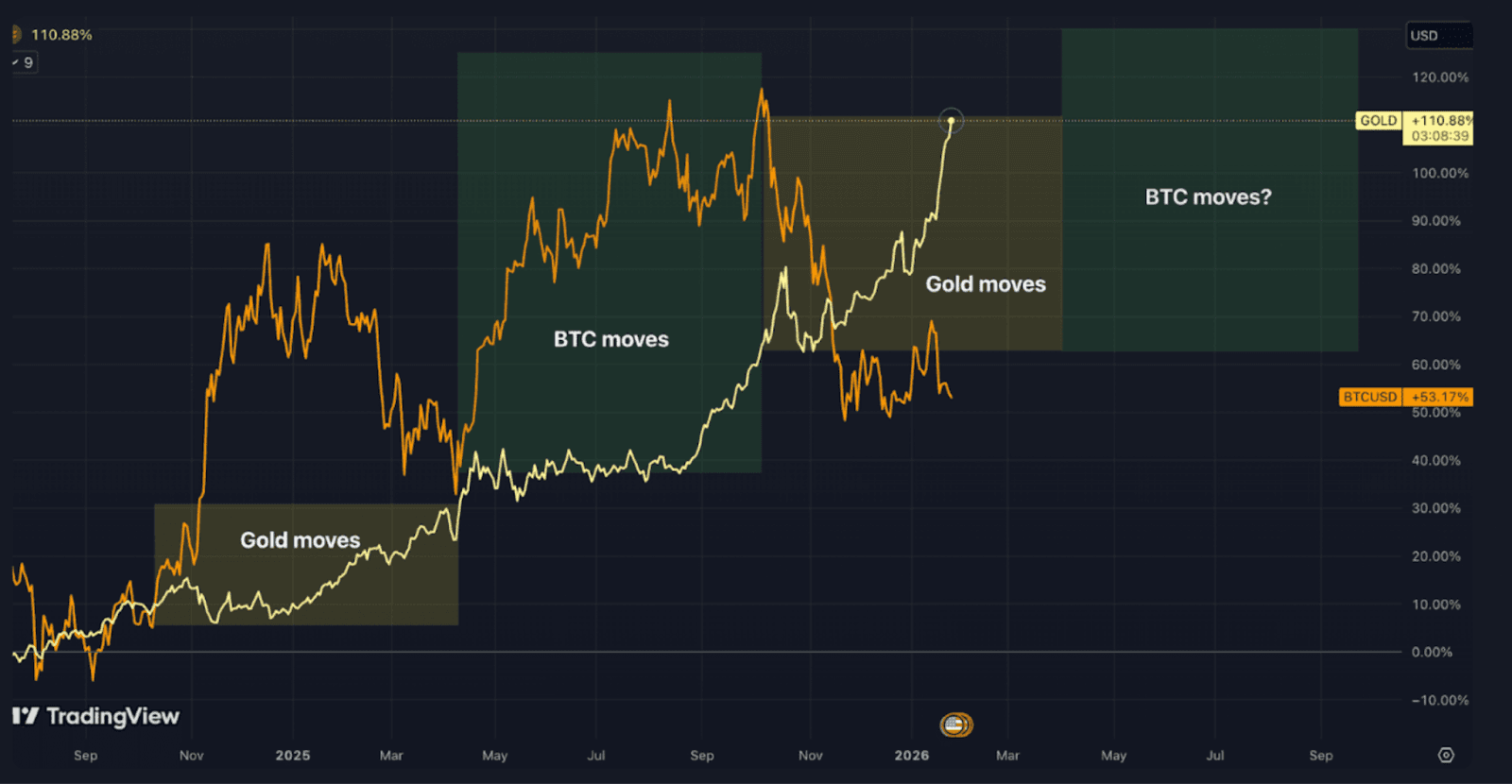
Another factor analysts sometimes monitor is the relationship between gold prices and the Bitcoin price. Historically, Bitcoin has occasionally followed broader trends seen in gold, particularly during periods when investors seek alternative stores of value. Gold is traditionally viewed as a hedge against economic uncertainty, and rising gold prices can reflect growing demand for assets that protect purchasing power.
In several market cycles, strong performance in gold has been followed by increased interest in Bitcoin. This does not mean the two assets move together at all times, but they can occasionally share similar market drivers.
If gold continues rising in global markets, it could signal broader investor interest in alternative assets. In such conditions, Bitcoin may also attract additional attention from investors looking for digital alternatives to traditional safe-haven assets.
Network Activity and Long-Term Adoption
Another factor that may influence the Bitcoin price in the coming months is the level of activity on the Bitcoin network. Increased adoption, transaction volume, and long-term holder behavior often provide signals about the overall health of the ecosystem. When more users interact with the network and demand for Bitcoin grows, it can strengthen long-term confidence in the asset.
Several indicators are often monitored by analysts:
- Growth in the number of active Bitcoin addresses
- Rising transaction volume across the network
- Increased accumulation by long-term holders
- Expanding use of Bitcoin as a store of value
While these indicators do not determine short-term price movements, strong network activity can reinforce positive sentiment and support the broader narrative of Bitcoin’s continued global adoption.
Market Liquidity and Investor Sentiment
Another element that may influence the Bitcoin price in March is overall market liquidity and investor sentiment. Crypto markets are highly sensitive to changes in buying and selling pressure, and shifts in sentiment can quickly affect price direction. When investors feel confident about the market outlook, they are more likely to allocate capital to risk assets such as Bitcoin.
Several indicators can influence liquidity and sentiment:
- Increased trading activity across major crypto exchanges
- Rising participation from institutional investors
- Positive media coverage and growing public interest
- Expanding liquidity in crypto-related investment products
When liquidity increases and investor sentiment improves, the Bitcoin price may find stronger support levels. However, if confidence weakens, the market can remain volatile and experience additional short-term fluctuations.
Summary
After a difficult February, the Bitcoin price now enters March with several possible scenarios ahead. The market could stabilize above key support levels, regain upward momentum if demand increases, or experience additional volatility before establishing a stronger base. Factors such as ETF inflows, gold market trends, network activity, and overall market liquidity may influence Bitcoin’s short-term direction.
At the same time, it is important to remember that predicting price movements in the crypto market is inherently uncertain. This article is provided for informational purposes only and should not be considered financial advice. Investors should carefully evaluate market conditions and conduct their own research before making any decisions related to Bitcoin or other crypto assets.